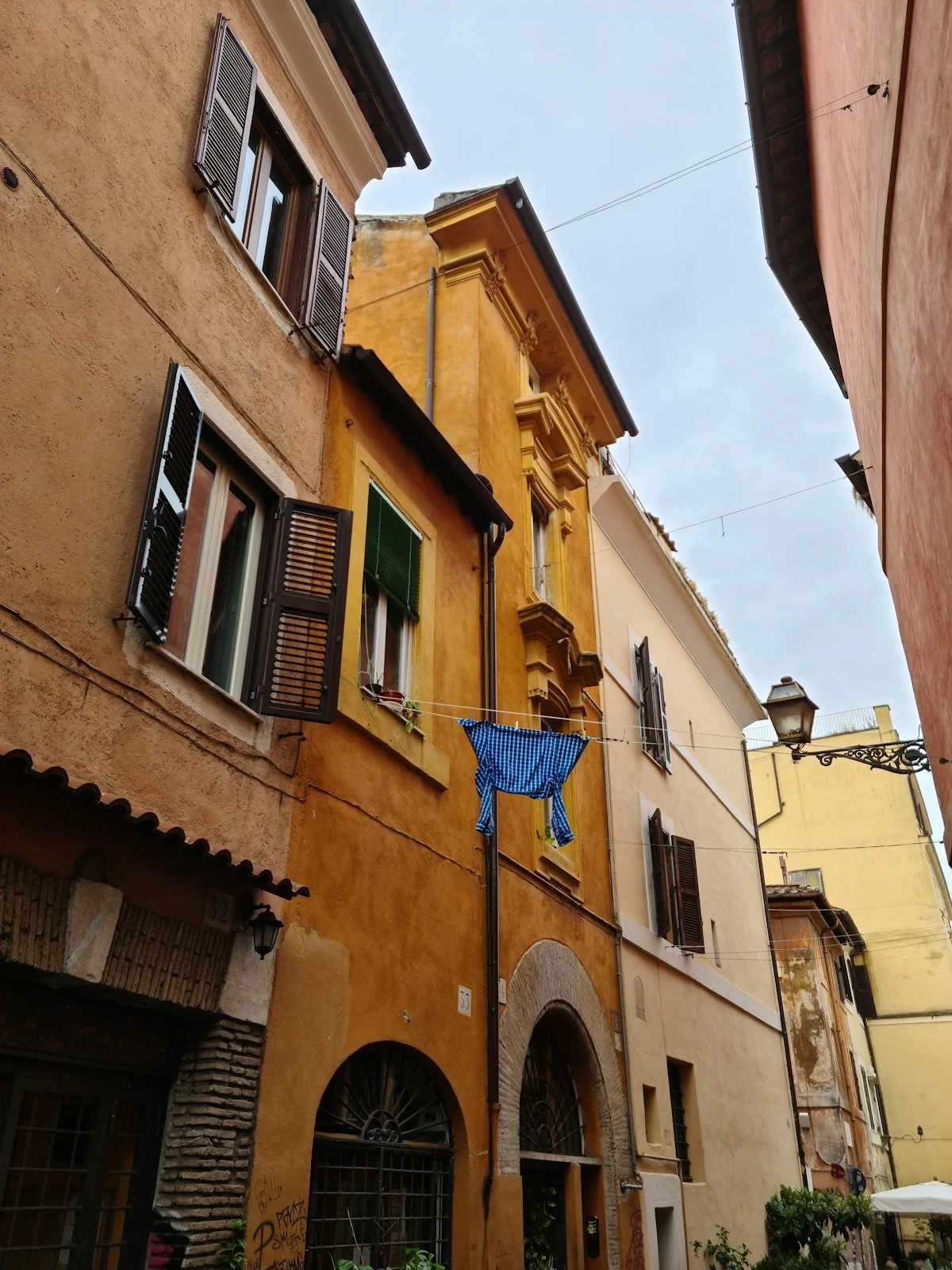
Start in Piazza Mattei, walk through Via della Reginella toward the Portico d'Ottavia, then reach the Great Synagogue area and cross Ponte Fabricio to Tiber Island. Allow roughly 1½–2½ hours for outdoor stops and a break. A museum visit, synagogue tour or full lunch requires additional time and its own arrangements.
This is a compact route, but its history deserves a slower pace than its distance suggests. Rome's Jewish quarter is a living neighborhood and a place of memory, not simply a picturesque lunch stop. Keep food, architecture and remembrance in the same day without reducing one to decoration for another.
Begin in Piazza Mattei
Use the Turtle Fountain as your first recognizable meeting point. Look at the scale of the square and the façades around it before entering the narrower streets. Save the Portico d'Ottavia and Ponte Fabricio as the next major references. You do not need to design a maze of every possible lane.
Continue into Via della Reginella and toward the Portico area, choosing available public passages. Keep entrances clear and avoid photographing residents as though the street were a stage. If a connection is blocked, return to a known point and find a public alternative instead of trying private doors or courtyards.
Understand the word “ghetto”
The historic ghetto was imposed in 1555. It refers to enforced confinement, not an appealing architectural style. Learning that distinction changes how you look at the neighborhood and the language you use to describe it.
A short outdoor walk cannot explain the whole history of Rome's Jewish community. If that is your main interest, give the Jewish Museum its own place in the plan. Its collections and interpretation offer more than a quick photograph of a façade. The community's story should not begin and end with persecution, nor be reduced to a menu.
Pause near the Portico d'Ottavia
The ancient remains provide an obvious landmark amid later streets and buildings. Stand where you can see the relationship between layers of the city without obstructing a passage. Look at what has survived and how ordinary movement continues around it; you do not have to enter an archaeological area to make this stop worthwhile.
In the surrounding area, take time for the memorials associated with the Nazi raid of 16 October 1943. Read names and inscriptions with attention. Avoid turning commemorative plaques or stones into props for portraits. With children, offer a short, age-appropriate explanation rather than skipping the subject entirely or overwhelming them with detail.
Decide about the museum before lunch
The Great Synagogue, or Tempio Maggiore, is a major landmark near the river. An exterior look is not the same as a visit inside. Check the Jewish Museum's current booking, tour and visitor information for the experience you want; do not presume you can enter the synagogue independently at any moment.
Religious observance, holidays and security arrangements may affect access. Follow the instructions of staff and use the designated visitor entrance. This route does not include admission or a guide. If your schedule cannot accommodate the visit, keep the outdoor itinerary and plan a proper return rather than treating a closed door as a failed walk.
Make a considered food stop
Read menus and prices before choosing a table. Jewish-Roman culinary tradition is an important part of the area, but location alone does not establish a restaurant's kosher status. If you need particular religious or dietary standards, ask the establishment directly and verify the information relevant to you.
Agree whether you want a snack or a longer lunch. A meal can become the central pause of the day, in which case shorten the continuation. Do not chase a specific dish without checking availability, ingredients and how it is prepared. A popular name on a menu does not answer questions about allergens.
Cross to Tiber Island
Use Ponte Fabricio to reach the island, checking the road crossing needed to approach it. Ponte Cestio connects the other side toward Trastevere. These two bridges let you continue across the river, but you can also end on the island or return the way you came.
Stay on the available public paths and respect hospital entrances and working spaces. The island is not an empty leisure park. A river-level descent is optional and can involve steps or temporary restrictions; it is not needed for this itinerary. In wet weather, slow down on smooth surfaces and do not approach closed river access.
Finish without another obligation
If the museum took longer, end with a short look at the island. If you still have energy, cross to Trastevere and choose a separate neighborhood route. Both options preserve a clear conclusion rather than creating an endless walk.
Save relevant stops and available offline material in Rome Walks before leaving Wi-Fi. Keep time for what you read as well as where you walk. This route is most memorable when a small number of places receive real attention.
Official sources
ROME WALKS
The city, in your pocket.
A route for your mood. Stories behind the stones. A map that brings it all together.
Get Rome WalksApp Store ↗