Walk Via Giulia from the Ponte Sisto end towards San Giovanni dei Fiorentini for a clear outdoor route through Renaissance planning and later changes. Start at Piazza San Vincenzo Pallotti, find the Farnese cluster around the Mascherone and arch, continue past Palazzo Falconieri, then look for the unfinished courthouse’s stone base before reaching the northern church. You can enjoy the street without entering private palaces or a crypt.
The street was opened in 1508 for Julius II as part of a larger urban programme. Its straight line is the subject of this walk: how an ambitious new route passed through an existing neighbourhood, and how pieces of that ambition survive. Allow about 75–100 minutes as my estimate for outdoor looking and pauses, excluding interiors and a meal.
Begin on the city side of Ponte Sisto
Gather at Piazza San Vincenzo Pallotti, off the bridge approach, and locate Via Giulia before starting. Stay on this bank for the main route. Looking towards the river first helps you understand that the street runs alongside it rather than continuously presenting a waterfront view.
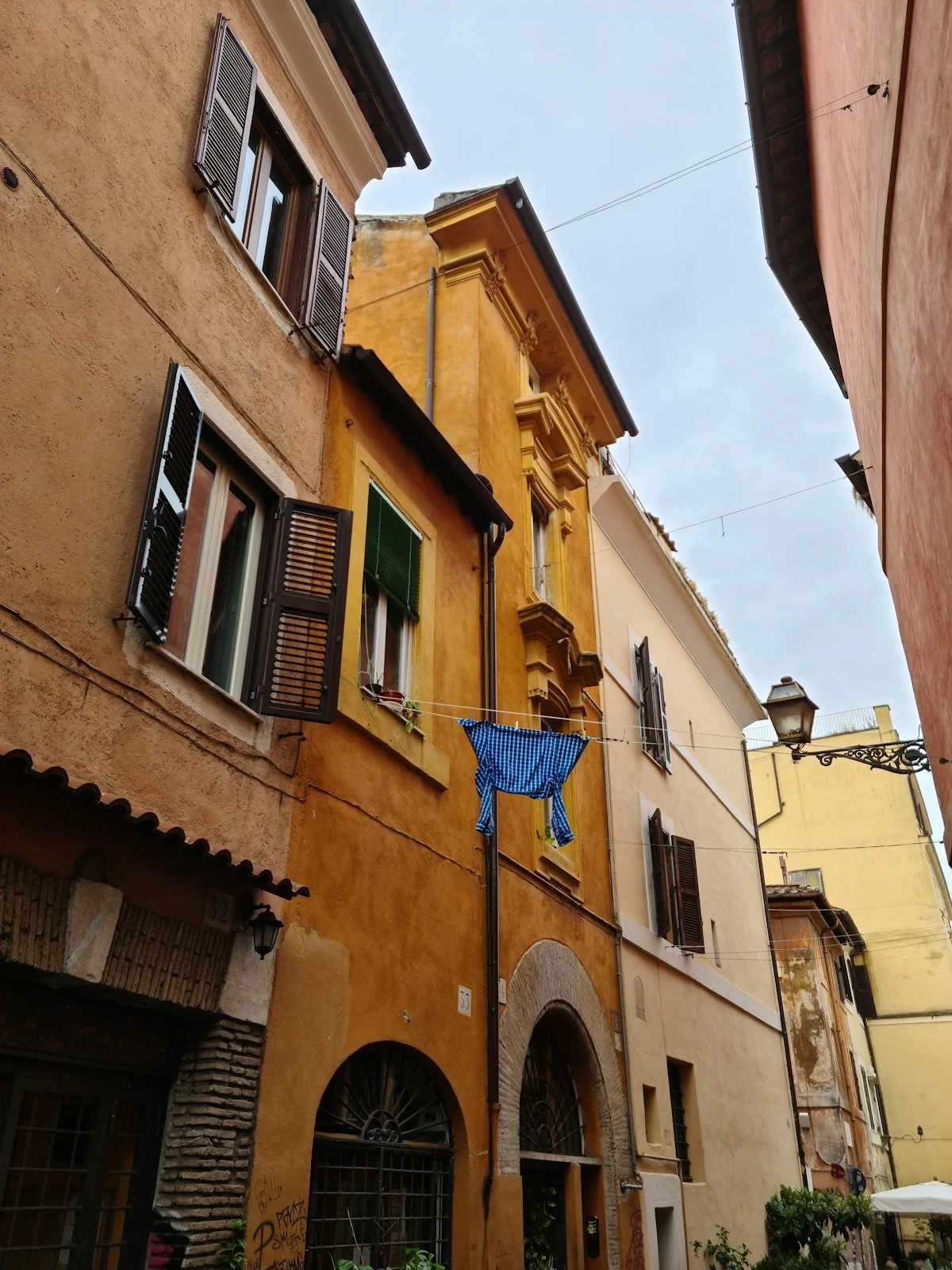
Follow the permitted pedestrian space into the southern stretch. The street is not a sealed museum corridor: entrances, deliveries and occasional vehicles require attention. Look ahead along its relatively straight line, then compare that view with the small side streets. Do not enter a doorway because it appears to lead to an attractive courtyard.
Read the Farnese cluster from outside
Find the Fontana del Mascherone, the Farnese arch and the rear setting of Palazzo Farnese in this southern cluster. The fountain combines an emphatic mask, bowls and a large reused basin, with the family lily above. The municipal monument description places its realization in the seventeenth-century water-supply context, with uncertain attribution; this walk does not turn that uncertainty into an exact construction date.
The arch belonged to a more extensive Farnese connection imagined towards the family’s property across the Tiber. It is not a pedestrian bridge you can follow across the river. Compare the projecting arch with the street’s long axis, then continue along the public route. The family emblem links a small water monument with a much larger palace landscape.
Notice the church façade and Falconieri details
At Santa Maria dell’Orazione e Morte, look at the façade’s death imagery. The confraternity’s history involved burial of abandoned bodies; the present eighteenth-century rebuilding is associated with Ferdinando Fuga. Treat the symbols as part of that religious and charitable history. The city lists visits by appointment, so a spontaneous crypt descent is not included here.
Nearby Palazzo Falconieri has a façade altered by Borromini, including distinctive falcon-headed features. Look at the edges and doorway arrangement rather than expecting the river loggia to be fully visible from the same street position. It is the home of the Hungarian Academy; cultural events and authorized visits follow that institution’s programme. A public event does not open every room or terrace.
Find what remained of the courthouse
Continue north along Via Giulia to the area between Via del Gonfalone and Vicolo del Cefalo. Here the rusticated stone remains popularly called the street’s “sofas” recall Julius II and Bramante’s unfinished courthouse project. Their value is precisely that they are fragments of a planned administrative centre, not a completed Renaissance palace.
Look at their heavy blocks against the narrower present street. Imagine the scale suggested by the base, while keeping conjecture separate from what is visible. They are not an invitation to climb or sit on historic fabric. This stop changes the theme from prosperous façades to a project that never reached its intended form.
Reach San Giovanni dei Fiorentini
Continue to the northern end and San Giovanni Battista dei Fiorentini. The church connects the street to the Florentine community; its long construction involved several architects, and its façade is a later stage. An outside finish is sufficient for this route. If you want an interior visit or to seek Borromini’s burial, check current opening and worship arrangements separately.
The nineteenth-century Tiber embankment works changed the relationship between palaces, gardens and river. At the end, compare the enclosed street you have walked with the broader riverside road. Do not descend to the lower river path automatically: stairs and the return connection are another mobility decision.
Choose the exit before adding another district
No major hill is required, but cobbles, narrow margins, kerbs and church thresholds matter. Outdoor street access needs no attraction ticket; palace visits, special rooms and guided programmes may require booking and payment independently. Use offline preparation to save both ends and a shorter exit before leaving.
For another day or a deliberate extension, Trastevere in the morning begins a different neighbourhood story beyond Ponte Sisto, while the Castel Sant’Angelo walk offers a northern riverside continuation. Choose one direction instead of retracing the entire street to add both.
Official sources
- turismoroma.it — › en › page › open air renaissance
- turismoroma.it — › it › luoghi › fontana del mascherone
- turismoroma.it — › it › luoghi › palazzo falconieri
- turismoroma.it — › it › luoghi › chiesa di santa maria dellorazione e morte
- turismoroma.it — › en › places › basilica san giovanni battista dei fiorentini
- culture.hu — › it › roma
ROME WALKS
The city, in your pocket.
A route for your mood. Stories behind the stones. A map that brings it all together.
Get Rome WalksApp Store ↗