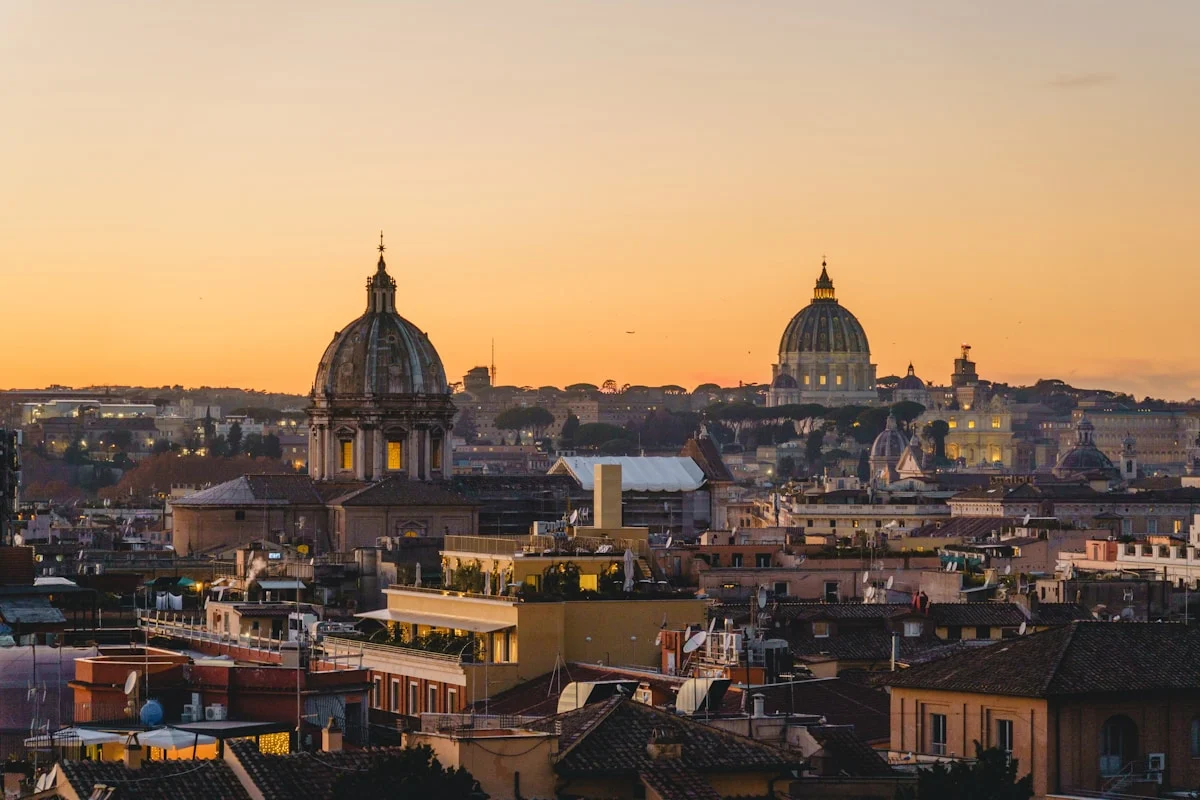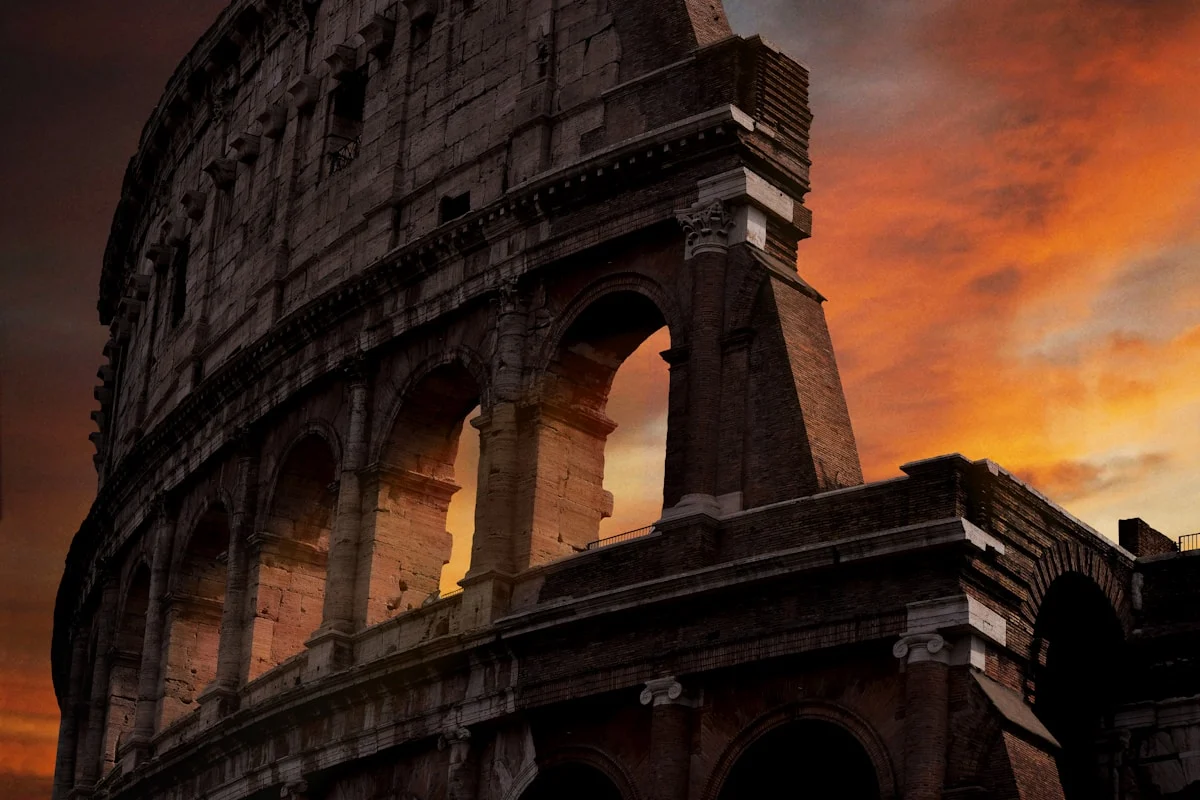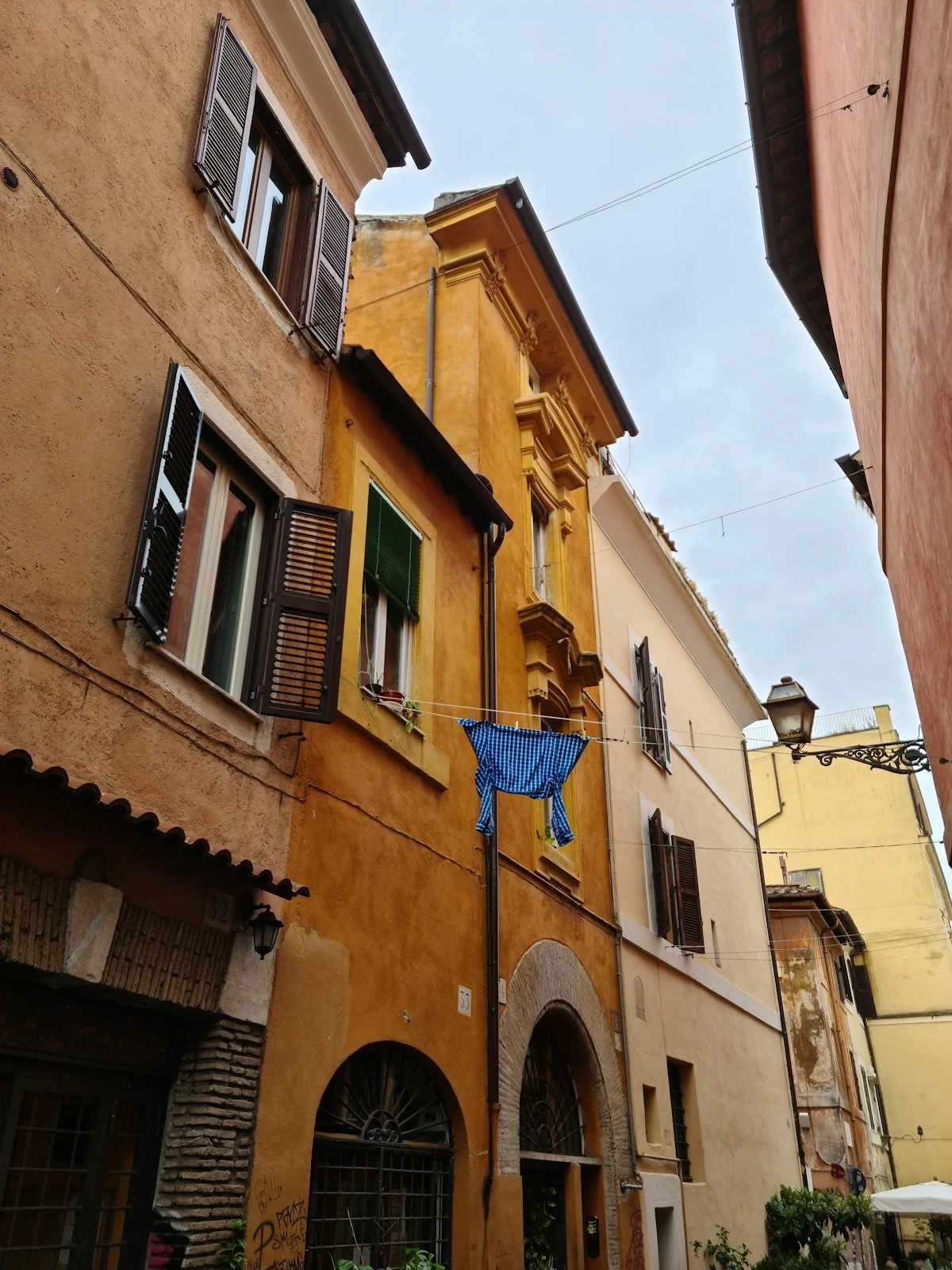
Sant’Andrea al Quirinale is a rewarding short visit if you look at its entrance, oval interior and altar as one composition. Approach along Via del Quirinale, pause outside the curved porch, then enter only when visitors are admitted. The main lesson is spatial: a relatively small room can feel broad, luminous and carefully directed without becoming a vast basilica.
Choose a hilltop approach
Find the church at Via del Quirinale 30. You can approach along the street from the Quirinal square direction or include it after a separate stop near the Four Fountains. These are practical choices, not a requirement to visit every church on the hill. Coming up from lower central streets adds climbing, so choose the actual connection before leaving your previous stop.
Outside, give yourself room to see the semicircular entrance steps and the porch together. They prepare a transition from street to church rather than merely decorating a doorway. Avoid stopping where you block people entering for worship. If steps are an obstacle, contact the church about the usable entrance instead of assuming the photographed front approach is suitable.
Understand the width of the oval
Inside, pause near the entrance and look across the room before moving forward. The long axis of the oval runs across your view rather than straight towards the altar. Notice how the chapels sit back from the main curve, allowing the room’s outline to remain legible. This is an effective way to understand the building without turning the visit into a catalogue of every object.
Bernini designed the church for the Jesuit setting, with patronage connected to Camillo Pamphilj and Alexander VII. Its architecture, coloured marbles, sculpture and painting work together. Try comparing a broad view with a closer look at one junction between a column and the surrounding wall: the smaller detail should help explain the whole room.
Follow the altar towards the dome
Let the altar become the next focal point, then lift your gaze towards the dome and lantern. The painting of Saint Andrew’s martyrdom is by Guillaume Courtois; other artists also contributed to this interior. Bernini’s authorship of the design does not mean that he personally made every painted or sculpted element.
Changes in daylight alter the impression, but no exact hour guarantees a particular effect. Looking patiently from one available position is more useful than repeatedly crossing the room for photographs. Keep voices low and respect any area reserved for prayer. A service takes priority over an architectural itinerary.
Check the church’s own notices
The Jesuit site checked on 11 October 2026 gives a weekly opening pattern and also retains a dated September weekday closure notice. That September restriction should not be presented as a permanent closure. Read the current notice before your visit and check the actual day; this article deliberately avoids freezing daily times.
An open church does not automatically include adjoining rooms, a special guided visit or every artwork. Ask about any separate reservation or charge. Allow my estimated thirty to forty-five minutes for the accessible main church and exterior, adding time for special access. The garden nearby is a separate public-space possibility, with its own gate and conditions.
Finish without another compulsory ascent
After leaving, decide between a short walk towards the Quirinal square and an available garden pause. Do not add a palace interior simply because it appears nearby: that is another booking and security process. Stone paving, entrance steps and street crossings make this a route to assess individually, not an accessibility certification.
The Bernini walk gives the visit a wider artistic context. For a neighborhood outing on another day, use the Monti walk. The route-choice guide helps keep this small stop within the time remaining, including your journey back.
Official sources
ROME WALKS
The city, in your pocket.
A route for your mood. Stories behind the stones. A map that brings it all together.
Get Rome WalksApp Store ↗