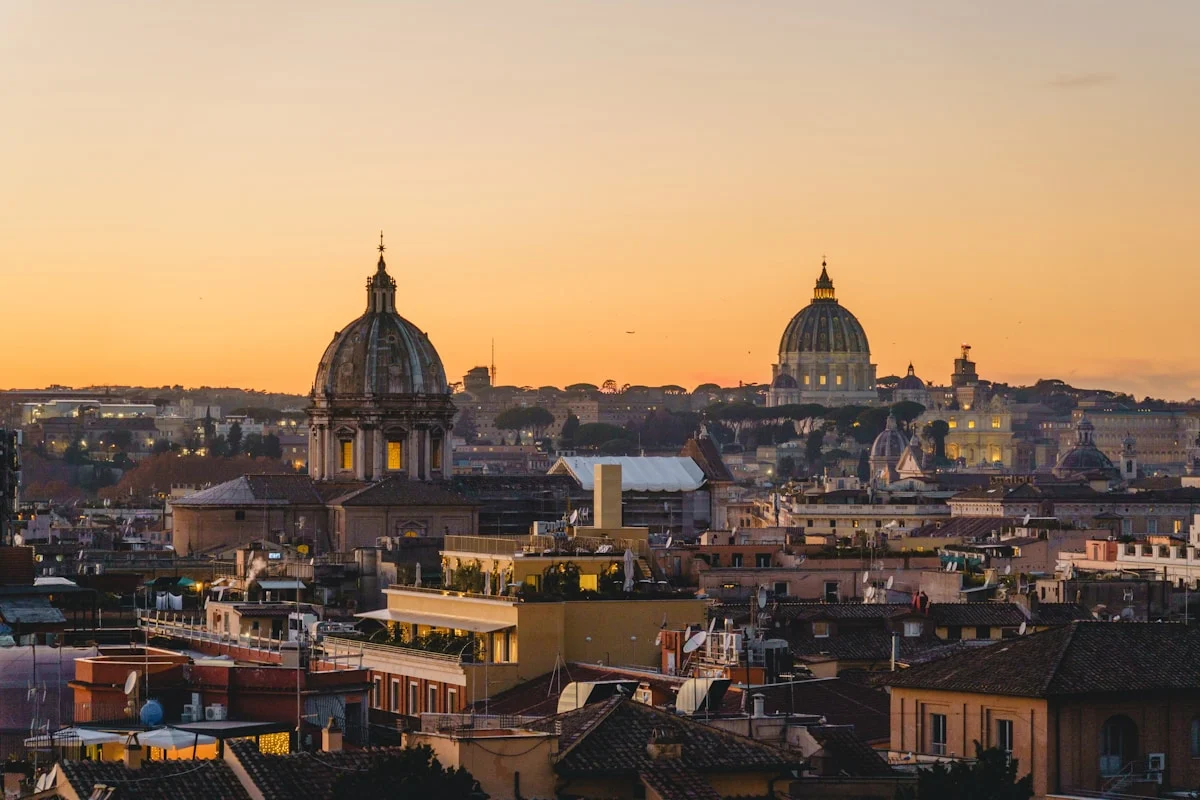
Sant’Ivo alla Sapienza rewards a small architectural visit: approach the old university palace, look along the courtyard towards Borromini’s church, and trace the dome upwards to its spiral lantern. Make the courtyard and exterior your planning basis. An open palace gate does not establish that the church interior is available, and archive opening arrangements are not church visiting hours.
Begin on Corso del Rinascimento
Find the palace entrance at Corso del Rinascimento 40, on the eastern side of the Navona area. Pause outside before entering so you can recognise the palace as a whole rather than walking straight towards the church. The complex served Rome’s university before becoming the State Archive’s headquarters. It remains an institution with working spaces, entrances and restrictions.
If the courtyard is open to visitors, follow the permitted entrance and remain in the public area. If it is closed, keep this as a brief exterior stop and continue towards Sant’Eustachio. Do not enter through a research entrance on the assumption that every door is a tourist route. This visit should fit around actual access rather than depend on an unverified Sunday timetable.
Read the courtyard before the dome
From an allowed position, compare the long courtyard with the curved church front at its end. Borromini worked within an earlier palace project; the relationship between the existing setting and his church is part of the interest. Look first at the strong horizontal lines of the surrounding arcades, then at the front that interrupts that rhythm.
Move only a few steps at a time. The useful question is how the same building changes when seen from the entrance and nearer the courtyard centre. A photograph taken immediately on arrival can flatten the composition. Looking with the phone lowered makes the transition between the palace and the rising dome easier to notice.
Follow the spiral upwards
The distinctive lantern gives the church a recognisable skyline. Trace the dome, the narrower upper structure and the final spiral rather than treating the whole silhouette as a single decorative flourish. Borromini’s seventeenth-century design belongs to Rome’s Baroque architecture, but this unusually constrained setting makes it different from a broad square with a monumental facade.
Avoid turning every emblem into a story you cannot verify. The municipal description identifies papal heraldic imagery in the complex. Seeing how small signs occupy a much larger architectural framework is enough for a first visit; you do not need to memorise a list of patrons to understand the space.
Treat an interior visit as an addition
The municipal page checked on 11 October 2026 still discusses worship being transferred back when the church reopens. It does not provide a dependable current tourist schedule. Verify directly before making the interior the reason for a special journey. Any exhibition or special guided access may have its own reservation or payment conditions; ordinary archive access does not include it automatically.
Allow an estimated twenty to forty minutes for an available courtyard and exterior, longer for an announced interior visit. Stone paving, thresholds and controlled doors require individual assessment. No step-free approach or suitable toilet is established by this short route.
Finish with one nearby choice
Return to Corso del Rinascimento and choose either Navona or the Sant’Eustachio–Pantheon direction. The Pantheon piazzas walk gives the latter a clear continuation. For a broader sculpture outing, see the Bernini walk, allowing for its different geography. Use the route-choice guide to keep the remaining walk within your actual time. Attraction admissions remain separate from any free or paid access in Rome Walks.
Official sources
ROME WALKS
The city, in your pocket.
A route for your mood. Stories behind the stones. A map that brings it all together.
Get Rome WalksApp Store ↗