Santa Cecilia in Trastevere works best as a basilica visit with optional additional spaces. Begin with the courtyard, look along the nave towards the apse and altar, then spend time with Stefano Maderno’s sculpture of Cecilia. Cavallini’s frescoes and the archaeological area require separate access decisions. Do not assume that seeing the church interior means every part of the monastery complex is included.
Approach from the quieter southern streets
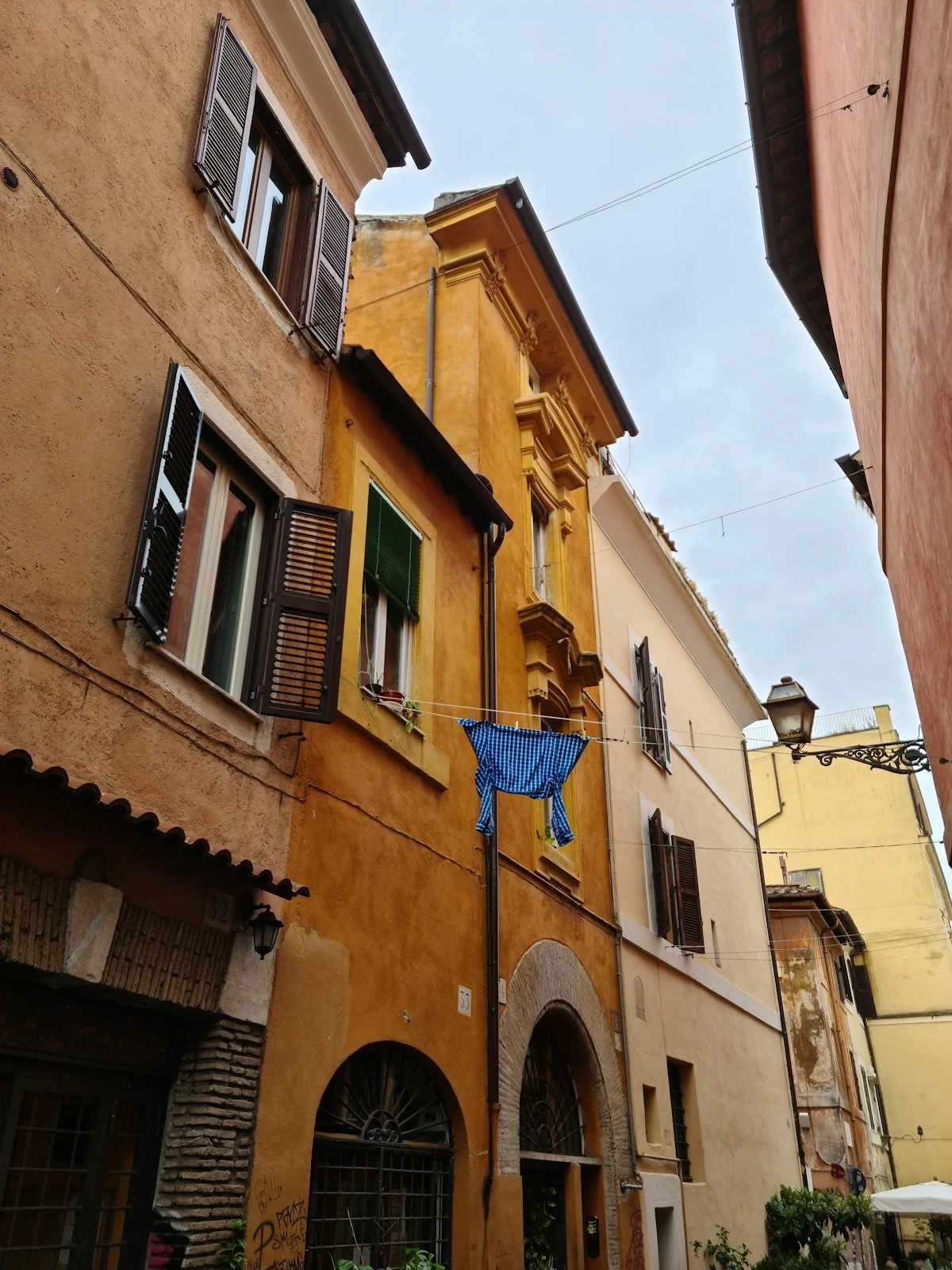
Find Piazza di Santa Cecilia on the southern side of Trastevere. A practical small approach runs from Piazza dei Mercanti towards the church square. It gives the visit a clear starting point without requiring you to cross the entire neighborhood. If coming from the busier Santa Maria in Trastevere area, plan the actual street connection and a marked crossing of Viale Trastevere.
Outside, pause in the publicly available courtyard and observe the relationship between its open space and the church front. A large ancient vessel occupies the centre. Keep the entrance clear and respect any private or monastic boundary. A courtyard is an introduction to the basilica, not permission to wander through every adjacent doorway.
Let the apse establish the older layer
Inside, look along the nave before approaching individual works. The apse mosaic belongs to the ninth-century phase associated with Pope Paschal I. Observe its position above the altar area and the way the figures address the congregation. You can appreciate the composition without going into a reserved sanctuary or identifying every person immediately.
The church contains works from different periods. Arnolfo di Cambio’s late-thirteenth-century ciborium and the later sculpture occupy the same larger setting. Compare their materials, forms and distance from your viewing position. This makes the visit an encounter with successive layers rather than a claim that the whole interior survives unchanged from one date.
Look carefully at Maderno’s Cecilia
Maderno’s marble figure lies below the altar. Start with the overall posture and the relation of the body to its setting, then look at the drapery and hands from your permitted position. Let the quiet horizontal form remain the focus instead of searching for a dramatic photograph at any cost.
The statue is connected with the saint’s cult and the historical account of the opening of her tomb. Religious tradition should not be presented as a modern forensic observation or a personal eyewitness report. Here the practical task is to look at an artwork in an active place of worship, with services and prayer taking priority.
Cavallini is a separate visit
The monastery’s official description explains that Pietro Cavallini’s Last Judgment is not visible from the main worship space. Access is through the monastery to the choir. Check the specific visiting window before travelling for the fresco; a basilica opening time alone is insufficient. Ask about the applicable admission and any restrictions rather than inventing a combined ticket.
If access is available, begin with the central figure and the surrounding groups, then consider the painted faces and their modelling. It is a different visual experience from an apse mosaic. The monastery page checked on 11 October 2026 does not announce scheduled guided visits for September and October, so this guide does not promise an October guided tour.
Archaeology remains an optional addition
The underground area has its own entry arrangements, time and physical demands. Stairs, confined passages and surface changes require a direct mobility check. The monastery currently lists the fifth-century baptistery and associated features as not visitable; do not build the visit around access to them. Other ordinary visits and restricted portions must be distinguished.
My estimate is forty-five to seventy-five minutes for courtyard and basilica, with a substantial extra allowance for an available fresco or archaeological visit. No fixed fee or unchanging daily timetable is asserted. Read the current monastery notices and ask about paid areas before committing.
Continue with the Trastevere morning walk or choose the Tiber Island route as a separate direction. Use offline preparation to save the chosen streets and keep enough time for the verified entrance.
Official sources
ROME WALKS
The city, in your pocket.
A route for your mood. Stories behind the stones. A map that brings it all together.
Get Rome WalksApp Store ↗