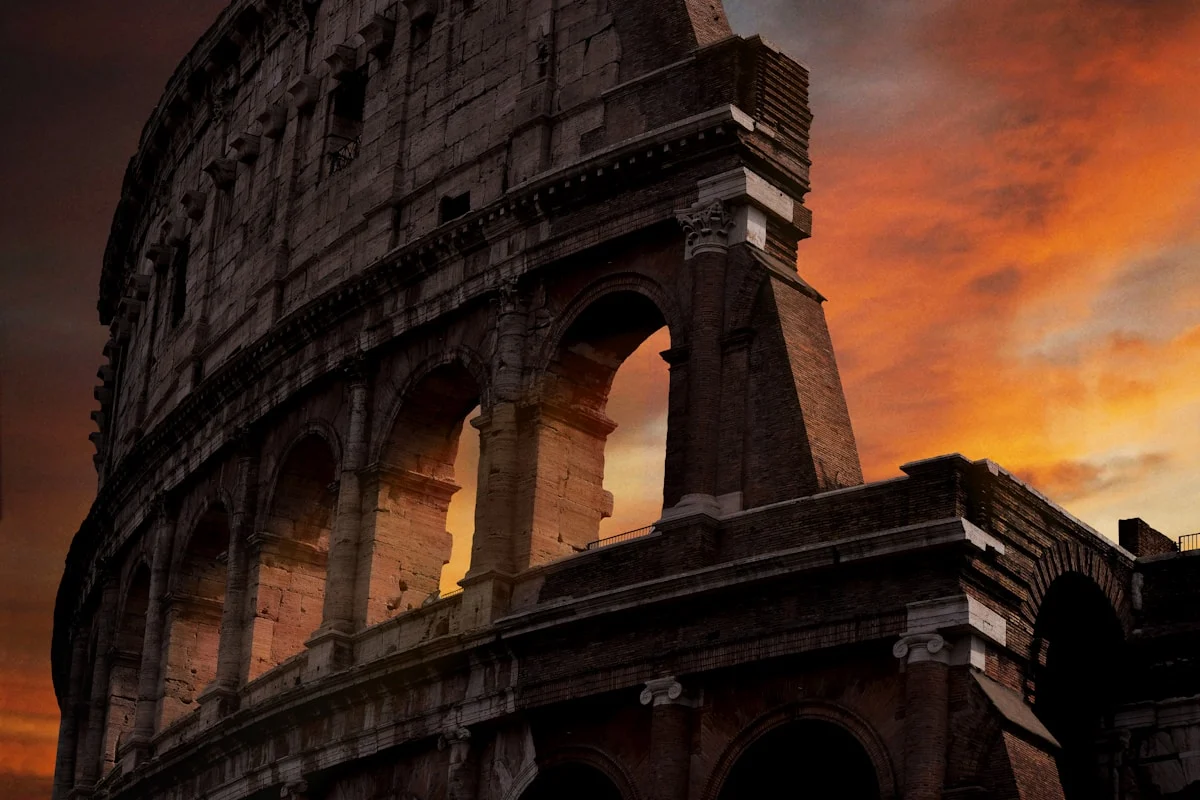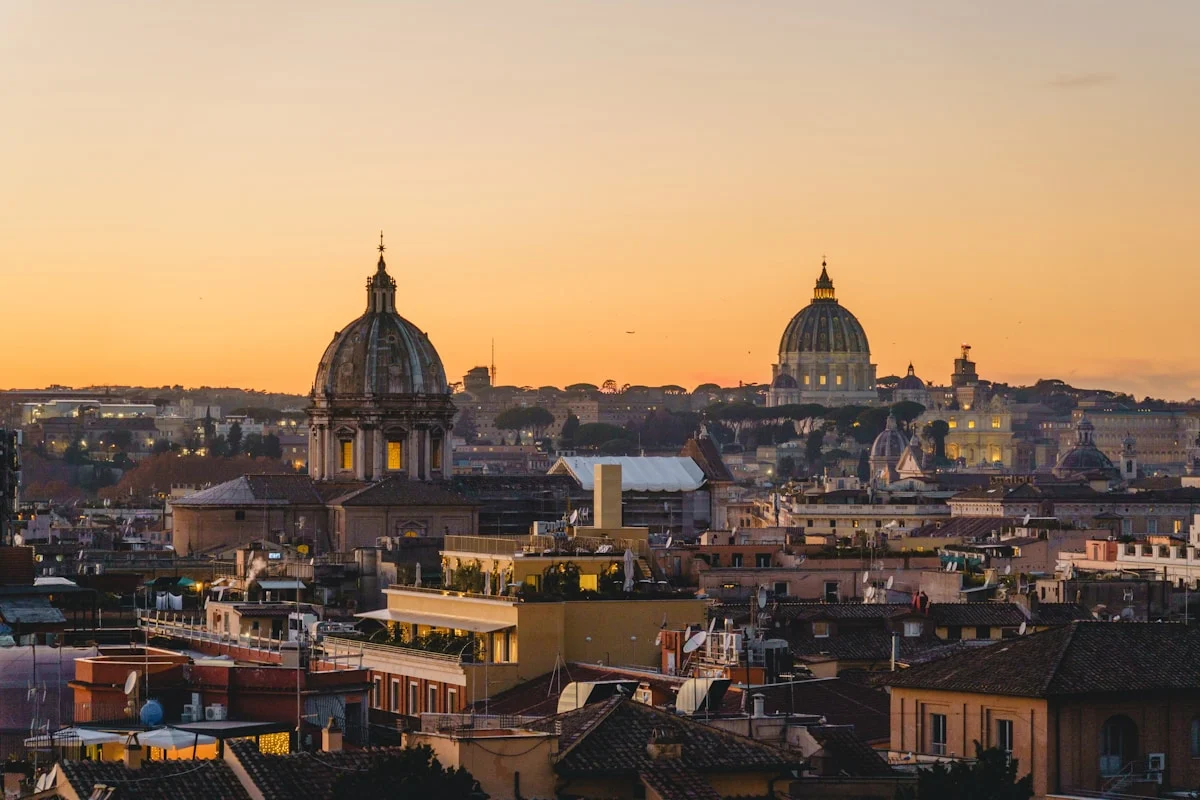
A useful Capitoline visit can be entirely outdoors: climb the Cordonata, look at the arrangement of Piazza del Campidoglio, then choose a public passage towards a Forum viewpoint. This is a focused hill walk, suitable as a deliberate addition to the first-day route. Plan roughly forty-five to seventy-five minutes with pauses; that is an editorial allowance, excluding museum entry and any waiting at restricted passages.
Find the right ascent
Approach the foot of the hill from Via del Teatro di Marcello, using the current pedestrian crossings around Piazza Venezia. Identify the broad Cordonata rather than the steeper staircase to Santa Maria in Aracoeli beside it. They lead to different destinations and make different demands on your legs.
The Cordonata has long, shallow steps. Its gentle appearance does not make it a certified step-free route. If avoiding steps is essential, check a mapped approach by road and the museum’s own accessibility advice before setting off. The alternative needs its own assessment of gradients and pavement; do not improvise it after becoming tired halfway up.
Notice the approach before photographing the square
Pause at the bottom where you can see the ascent as a whole without standing in the flow of people. The paired sculptural groups at the top form a gateway into the space. Notice how the ramp draws your eye upwards, then lets the square appear gradually.
Keep moving through narrow or busy sections, and stop on a wider part if you want to consult your phone. Wet stone and the repeated shallow edges deserve attention. A short climb still benefits from sensible shoes and a free hand, particularly when carrying a child or managing luggage.
Read the square as a designed room
At the top, face Palazzo Senatorio. Palazzo dei Conservatori and Palazzo Nuovo frame the sides. The square’s shape and matching facades create a carefully composed setting associated with Michelangelo’s redesign of the hill. Look once from near the entrance and again from a side position; the different angles explain more than a single close photograph of the statue.
The star pattern belongs to the paving design, but its execution is much later than Michelangelo. You need not memorise dates to understand the effect: the ground directs attention to the centre while the palaces contain the view. Leave entrances and official working areas clear.
Know which Marcus Aurelius you are seeing
The equestrian statue outdoors is a copy. The ancient bronze original is protected inside the Capitoline Museums. That distinction lets you enjoy the square without believing you have already seen the museum’s principal object.
Museum doors do not turn the whole hill into a ticketed enclosure. Conversely, access to the public square does not include the collections, internal passages or museum viewpoints. If the original statue is your priority, reserve a separate block of time and check the official museum ticket and notices before joining an entrance queue.
Choose one Forum view
Follow a currently open public passage around the side of Palazzo Senatorio towards the archaeological-facing edge. Use the actual signs and barriers: municipal events and works can change access. Stop at an available public viewpoint, without treating a closed gate as an invitation to find a shortcut.
The change of level helps explain why the Forum is a landscape below the modern city. An exterior view is orientation, not admission to the excavations. The Roman Forum guide helps decide whether a separate archaeological visit merits another day.
Finish with a decision, not another compulsory climb
Return to the square and descend by a route that suits your group. You can finish near the hill or continue towards the historic centre; do not add Aracoeli simply because its staircase is adjacent. Check the endpoint before using Rome Walks to choose the next route. Keeping this outing small leaves time to remember the relationship between ascent, square and ancient landscape.
Official sources
ROME WALKS
The city, in your pocket.
A route for your mood. Stories behind the stones. A map that brings it all together.
Get Rome WalksApp Store ↗