Crypta Balbi is temporarily closed to the public at the official-source check on 11 October 2026. Plan this as an explanation of the site and a short exterior outing, not an underground visit. Check the Museo Nazionale Romano notices again before travelling; no reopening date is assumed here. If you need an indoor museum today, choose an actually available collection rather than waiting at this door.
Why this site matters even while closed
Crypta Balbi takes its name from the portico associated with the ancient Theatre of Balbus. The museum’s importance lies in the changing life of a city block: monumental Roman spaces were reused for occupation, production, religious buildings and later urban development. It is a history of transformation rather than a single preserved moment.
The archaeological account includes a workshop deposit, lime production and later bathing arrangements in the area of the exedra. These are examples of successive uses, not things promised visible from the street. A name such as “crypta” also does not make the site a Christian burial catacomb. Keep its urban and theatrical origins distinct from other underground visits in Rome.
Locate the closed museum without making it a queue stop
The museum address is Via delle Botteghe Oscure 31. Use the address to orient yourself, read any current exterior notice and continue. A short look is enough: do not occupy the entrance, try neighbouring doors or assume someone selling a tour can override the closure.
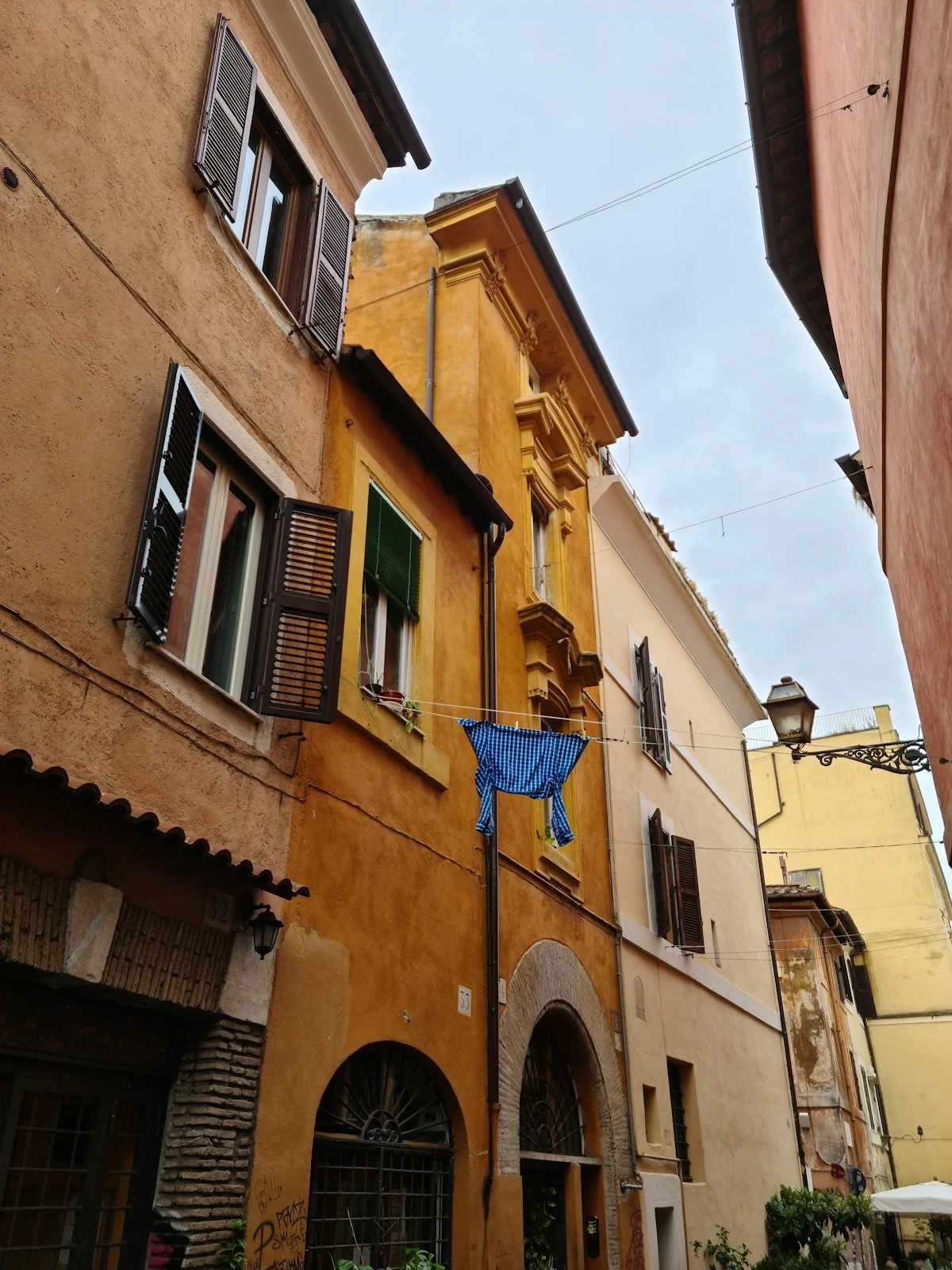
For a compact outdoor sequence, start here and look along the public street towards Via Michelangelo Caetani. Observe the relationship of building fronts, street width and the block’s scale. The visible present-day street is not a transparent diagram of every archaeological phase. Without entry, you cannot claim to have seen the museum’s excavated portico or collections.
Use the idea of layers carefully
“Layers of Rome” does not mean every century rests neatly above the previous one. Buildings are reused, materials removed and spaces altered. The museum’s account of marble burned into lime is particularly useful: a later activity can consume an earlier monument rather than preserve it as a convenient floor below.
Use that idea when looking at the surrounding block, but separate observation from historical inference. A modern doorway alone does not reveal the date of the structure behind it. Avoid inventing a hidden passage that connects this museum to nearby sites. The closure prevents the detailed object-based visit that would normally support a deeper reading.
Continue to Largo Argentina as a different site
Return to the main street and follow the public connection towards Via Florida and Largo di Torre Argentina, using marked crossings. Allow about forty-five to seventy-five minutes for the short exterior outing with stops. This estimate excludes any archaeological entry or longer meal, and street works may require a different crossing.
At Largo Argentina, the open archaeological area is a separate monument with its own visitor arrangements. Looking from street level differs from descending into its ticketed route. If you want to enter, read the municipal site’s current conditions and accessibility information. An MNR ticket for other museums should not be assumed to cover this municipal archaeological visit.
Choose one continuation, not a replacement marathon
You can finish at Largo Argentina. If you want a longer district walk, the Jewish quarter and Tiber Island guide supplies a separate sequence, while Pantheon and piazzas offers another direction. Choose one; trying to compensate for the closed museum with every nearby landmark produces a different day.
Before moving on, use Rome Walks route selection to check your endpoint and available material. Keep Crypta Balbi as a future possibility only when an official reopening is confirmed. Knowing why a closed site matters and choosing an honest alternative is more useful than pretending the intended museum visit took place.
Official sources
ROME WALKS
The city, in your pocket.
A route for your mood. Stories behind the stones. A map that brings it all together.
Get Rome WalksApp Store ↗